| Postgraduate / Graduate Program (Master, S2) |
See also : » Other Studies Program| Study Program Name | : | Agro-technology (Agricultural Industry Technology) (S-1) | | Science group | : | Agriculture | | Concentration / Specialisation | : | ⛭ Agro industry
⛭ Agro technology (Agricultural Industrial Technology) | | Graduate Title / Mention | : | Engineer or Bachelor of Agricultural Technology or Bachelor of Agricultural Industry Technology (Sarjana Teknologi Pertanian or Insinyur) | | Title abbreviations according EYD | : | S.T.P. or Ir. | | Title abbreviations are popular (used public) | : | STP. or Ir. | | PTS organizers (please click) | : | ⛭ UNSUB - University of Subang, Jawa Barat
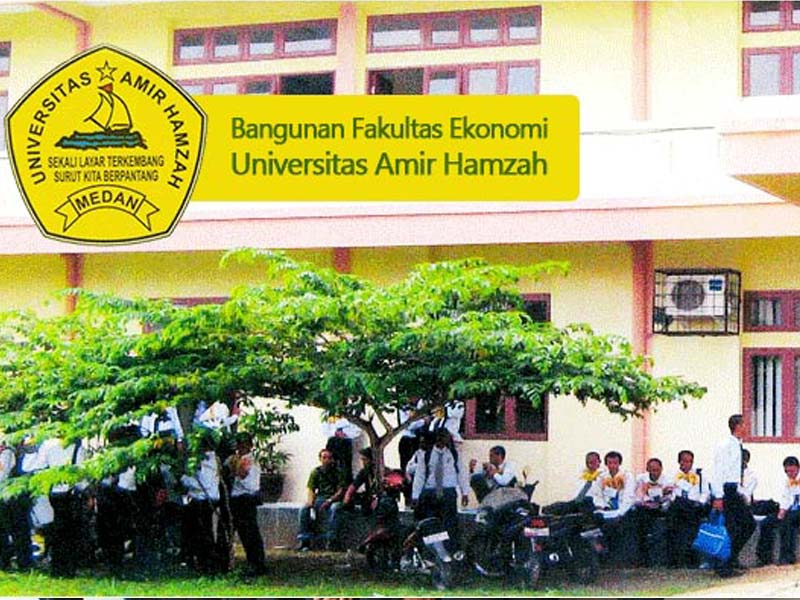
⛭ UHAMZAH - University of Amir Hamzah, Medan
⛭ UCM - Makassar Cokroaminoto University
⛭ KAHURIPAN - University of Kahuripan Kediri
⛭ UM Palangkaraya - University of Muhammadiyah Palangkaraya
⛭ University of Insan Cendekia Mandiri
⛭ UBY - University of Boyolali
⛭ UNU KALBAR - Nahdlatul Ulama University in West Kalimantan
⛭ al azhar - University of Al-Azhar Medan
⛭ UNU Kaltim - Nahdlatul Ulama University East Kalimantan
⛭ UHS Bandung - Halim Sanusi University
⛭ FTan UMJ Jakarta - Faculty of Agriculture, University of Muhammadiyah Jakarta
⛭ UMSJ - Mochammad Sroedji University
⛭ UNMURA - Musi Rawas University
⛭ University of Nahdlatul Ulama Cirebon
⛭ STIPER Jember
⛭ Satyagama University Jakarta - Satyagama University Jakarta
⛭ UICI Insan Cita Indonesia University | | Study Period & Study Load (Credits) : | SMA/SMU, SMK graduates, equivalent proceed to
S1 Agroteknologi (Agricultural Industry Technology) | Study Load = 144 - 152 sks | Study Period =
8 semester | D3, Polytechnic graduates, equivalent proceed to
S1 Agroteknologi (Agricultural Industry Technology) | Study Load = 40 - 46 sks
(If not a piece of science additional are given 2 - 21 sks) | Study Period =
3 semester | D2, S1, D1 graduates, transfer proceed to
S1 Agroteknologi (Agricultural Industry Technology) | Study Load = Calculated from remaining credits | Study Period =
Calculated remaining credits |
| | Curriculum / Subjects Courses | : | See below | | Prospectus (Objectives, Competencies, Job Prospects / Career Graduates) | : | See below |
Title/mention above is a title often used (not necessarily used PTS).
Regarding title (for S1, S2, S3) or mention (for diploma) which is used by universities in Indonesia currently has no standard (not standard) again, although the government has made the rules, but most colleges only obey some of the rules the. It can not be blamed, because the development of the science group is very rapid and led to new branches of science which is an integration of several scientific groups, making it difficult for universities to classify these branches of the science group that created the government.
Similarly, by making short title / mention such, people tend to create their own abbreviations that are even more popular than EYD Indonesian rule.
Below given curriculum / course and prospectus (competency, job prospects / career graduates, etc.). For subjects study program of presented here is a slice (and some combination) of a college curriculum, so it is possible some no elective courses at the college, or the slightly different name of his courses.
Prospectus of S1 Agricultural Industry Technology
(Agro-industry, Agro-technology) |
Competencies of Graduates of S1 Agricultural Industry Technology S1 Agricultural Industry Technology graduates equipped with the knowledge, professional ethics, skills and ability to develop and apply technology, involving the chemical sciences, mathematics, physics, engineering and biology to conservation of soil, producing crops, and transform it into other forms of presentation include how-preservation method, which has the added value in the quality, nutritional value and power point and ready to be used as industrial, trade and consumption of materials, by conducting process optimization and management in the biological production systems.
S1 Agricultural Industry Technology graduates :- Having the ability to use, design and develop wide range of equipment and Agro-industry processes.
- Have the ability to manage the system include the ability of agro-industry managerial, engineering (engineering) mastery of technology and production processes.
- Able to systematically solve problems in the agro-industrial system and skilled developing alternatives.
- Have the ability to plan, produce and develop a variety of industrial products and natural resources (agricultural products)
- Having the ability to process transpormasi infut (raw materials, machinery, labor and capital method)
- Able to conduct research and development of agro-industry systems for improvisation and innovative with good processing towards efficiency.
- Able to monitor and control the quality of raw materials that include requirements, auxiliary materials, preservatives and products according to quality and safety.
- Able to control and control and design specifications in processing materials, machinery, equipment and procedures for processing into quality and safety of agricultural products is guaranteed.
- Having the ability to do the planning and design of machinery and processing equipment that is effective, efficient and safe swsuai with quality standards.
- Able to setup and control as well as the purchase and marketing of raw materials, auxiliary materials and products involved in the agro-processing industry.
- Having the ability to perform post-harvest handling of agricultural products, processed agricultural products, conduct and supervision of sanitation, running pertaniann industrial management, and able to carry out entrepreneurship.
- Mastering the technical and managerial skills of farming, such as land preparation, seeding, planting, fertilizing, weed pest control, harvest and post-harvest as well as managerial and entrepreneurial competencies.
- Have a knowledge and appreciation of the biological or agricultural systems that are used as the basis for the application of technology and engineering.
- Having the ability to identify and analyze problems in the processing of agricultural technology and make approaches to problem-solving and evaluation efforts.
- Have the ability to design systems and processes with respect to nutritional aspects, economic, social and environmental impact.
- Having the ability to communicate, conduct independent learning and build cooperation.
- Entrepreneurial spirit that has mastered the technology with high professionalism and be able to adopt and become innovators who are sensitive and responsive to the agricultural development of the technology industry, so as to take advantage of business opportunities based on scientific considerations.
- Having a social life and professionalism that is responsible for solving technology problems that will benefit the wider community.
- Plan, implement, manage, develop and evaluate a variety of jobs in the agro-industry.
General / basic competency Bachelor of Agricultural Technology Industry is having quality and intellectual integrity; highly competitive both academically and morally; able to adjust to the changes; realize that science is always advancing and evolving; able to browse and obtain scientific information / engineering ; know how and can continually learn; in addressing each issue, and was able to uncover the structure of the core problems and set priorities stages of completion; know and can take advantage of the usefulness of mathematics and information technology can apply science and knowledge, competent and skilled in the field of agricultural technology industry; able to solve problems logically, utilize data / information available; able to use these concepts to explain things that are not / less clear; able to work independently and effort; able to actively participate in the working group; able communicate with experts in other areas of expertise and utilize their help; able to effectively utilize the resources available; able to start forming units pioneering entrepreneur in the field of agricultural technology industry, able to follow new developments in the field of agricultural technology industry, conduct research, or follow the course of study at the next level.Profession and Career Graduates of S1 Agricultural Industry Technology Bachelor of Agricultural Technology Industry can work and careers in a variety of government agencies or private (national and multinational) as planners, engineers, practitioners, experts, managers / staff, consultants, researchers, quality control, supervision or analyst, etc., in various fields , especially in the areas of:- Plantation crop industries: industrial sugar, coffee, tea, chocolate, etc..
- Horticultural crops industry: industrial processing and preserving of fruit-vegetable.
- Industrial fermentation products: alcohol, sorbitol, HFS, beer, MSG, traditional food etc..
- livestock industry: dairy processing industry, corned beef, canned meat, sausages, nuggets, animal feed, etc..
- Aquatic product industry: industrial canning and processing of aquatic (freshwater fish, marine fish such as sardine / mackerel, tuna, shrimp, scallops, seaweed, etc.).
- Industry crop yields: instant food industry, bread / bakery, flour mills, etc..
- Industry drinks and snack products: bottled water, soft drinks, syrup, confectionery, jam & jelly, snacks and crackers, food extrusion etc..
- etc.
Bachelor of Agricultural Technology Industry can work and a career as a researcher or analyst on institutions / research centers or lecturers in Universities or Institutions of Professional Training, etc.
Being a techno or entrepreneurs (self-employed) with established consultants or contractors in the field of agriculture and agro-industry, in the field of industrial and agricultural processing; founded the restaurant and catering (catering services), etc.
S1 Agro-technology Courses
(Agricultural Industry Technology) |
* = Specificity Electives / General Options
SKS = Semester Credit Units
| Courses | SKS | | Agroecology * | 2 | | Agroklimatologi | 3 | | Agro-tourism (Agrowidyawisata) * | 1 | | Cost Accounting * | 2 | | Environmental Impact Assessment (EIA) | 2 | | Seed Quality Analysis * | 3 | | Regression and Correlation Analysis * | 2 | | Computer Applications (Information Technology) | 3 | | Landscape Architecture (Landscape) * | 3 | | Indonesian | 2 | | English I | 2 | | English II | 2 | | English III * | 2 | | English IV * | 2 | | Planting Plants Grow Hard | 3 | | Biochemistry Plant | 3 | | Biology | 3 | | Soil Biology * | 3 | | Plant Biology | 3 | | Soil Bioremediation * | 2 | | Plant Biotechnology | 3 | | Botany | 3 | | Aeroponic and hydroponic cultivation * | 2 | | Fruit Cultivation * | 3 | | Floristry and Ornamental Plants * | 3 | | Cultivation By Land Conservation * | 2 | | Raising Vegetables * | 3 | | Cultivation Insightful environment * | 3 | | Ornamental Plant * | 2 | | Cultivation of horticultural * | 2 | | Industry and Plantation Crops * | 2 | | Food Crops * | 2 | | Energy Producing Vegetable Crops * | 2 | | Cultivation Annuals * | 3 | | Annual Crops * | 3 | | Basic Science Land | 3 | | Crop Protection Association | 3 | | Agronomy Basics | 2 | | Basic Accounting * | 2 | | Raising Basics | 3 | | basics of Horticulture | 3 | | Fundamentals of Soil Science | 3 | | Management Basics | 2 | | Basics Plant Protection | 3 | | Plant Ecology | 3 | | Agricultural Economics | 2 | | Production Economics * | 2 | | Physics | 3 | | Advanced Physiology (Nutrition & PGR) * | 2 | | Post-Harvest Physiology Horti * | 3 | | Plant Physiology and Plant Development | 2 | | Genetics | 3 | | Geography Land | 3 | | Nutrition and Food * | 2 | | Plant Nutrient * | 2 | | Relations Land, Water and Plant * | 2 | | Micro Climate * | 2 | | Weed Science * | 3 | | Land Resource Information * | 3 | | Irrigation and Drainage | 2 | | Biodiversity | 2 | | Population * | 2 | | Job | 2 | | Soil Fertility and Health | 3 | | Entrepreneurship | 2 |
| | | Courses | SKS | | Advanced Entrepreneurship * | 2 | | Agricultural Chemistry | 3 | | Applied Soil Physics Chemistry * | 2 | | Agricultural Communication and Extension | 2 | | Land and Water Conservation * | 3 | | Culture In Vitro Tan * | 3 | | Tissue Culture * | 3 | | Agribusiness Management * | 3 | | Special Issues Horti * | 2 | | Mathematics | 3 | | Agricultural Mechanization | 2 | | Agribusiness Research Methods * | 3 | | Scientific Methodology | 2 | | Agricultural Microbiology * | 2 | | Postharvest Agricultural Products * | 2 | | Agricultural Development * | 2 | | Breeding Vegetative * | 3 | | Plant Breeding | 3 | | Religious Education | 2 | | Citizenship Education | 2 | | Pancasila Education | 2 | | Introduction to Agricultural Biotechnology * | 3 | | Introduction to Economics | 2 | | Introduction Farm | 2 | | Agribusiness Community Development | 3 | | Water Management | 2 | | Weed Management and Pesticide Application Techniques | 3 | | Pest Management | 2 | | Coastal Stewardship * | 2 | | Disease Management | 2 | | Plantation Management * | 2 | | Soil and Water Management * | 2 | | Introduction Gadfly Bodies | 3 | | Agricultural Extension * | 2 | | Research Design * | 2 | | Designing Experiments * | 3 | | Sustainable Agriculture * | 3 | | Urban Agriculture and Sustainable Parks * | 2 | | Livestock and Fisheries * | 2 | | Seed Production * | 2 | | Radiation Biology * | 2 | | Spatial Design * | 2 | | Land Reclamation * | 2 | | Agribusiness System | 2 | | Sociology | 3 | | Statistics | 3 | | Commerce Agriculture * | 2 | | Vegetative Propagation Techniques * | 2 | | Seed Technology | 3 | | Biofuel Technology * | 2 | | Instrumentation Technology * | 2 | | Tissue Culture Technology | 3 | | Plant Media Technology * | 2 | | Post Harvest Technology | 2 | | Open Technology and Penyiapa Land * | 2 | | Fertilization Technology | 3 | | Agricultural Products Processing Technology | 3 | | Toxicology * | 2 | | Final | 6 | | Act Cultivation System * | 2 | | Farming * | 3 | | Wimaya * | 2 | | Organizing Grow * | 2 |
| |
|
|
|
|
|